
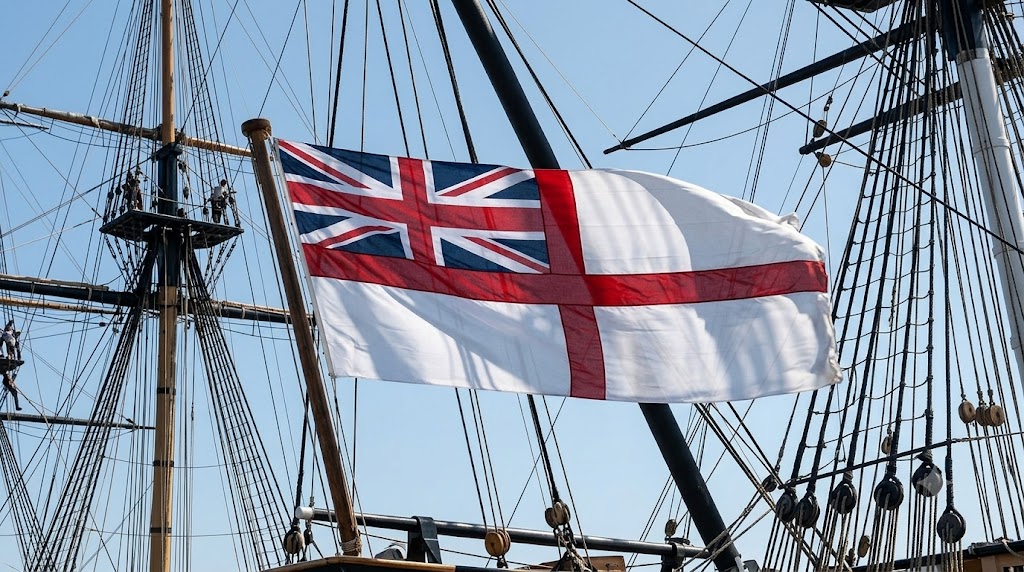
Join the Navy ... HMS Victory, an unusual posting
I spent ten years as a radio operator in the British Royal Navy, serving in a variety of warships and shore stations around the world. One of my more unusual postings was as a tour guide aboard HMS Victory, which is dry-docked in Portsmouth Naval Dockyard.
HMS Victory had no need for radio operators, as at that time radio had not yet been discovered. So, what was I doing on board? Between postings, sailors are assigned to general duties. Over the years, in my case, they ranged from producing training schedules for new recruits to, standing sentry at the main gate of an onshore base, working as a general handyman at the local commander’s residence, and a variety of other tasks as was needed at the time.
As a tour guide on HMS Victory, it would have been useful to know something of her history, although no formal training was offered. We simply showed tourists around, stated the obvious, and added the kind of lower-deck humour sailors are known for. Looking back and now with a little more maturity, I felt that a summary of HMS Victory’s history would have been useful then and at least now adds some credibility to this story.
HMS Victory: A Brief Background
Launched in 1765, HMS Victory is a legendary first-rate ship of the line. Best known as Vice-Admiral Lord Nelson's flagship at the Battle of Trafalgar in 1805, she helped defeat the combined French and Spanish fleets. Today, she remains the world's oldest commissioned warship and serves as a museum.
Built from timber taken from more than 6,000 trees, HMS Victory saw action in the American War of Independence and the French Revolutionary Wars before undergoing a major refit to become Nelson's flagship in 1803. Her defining moment came on 21 October 1805 at the Battle of Trafalgar, where Britain’s victory secured naval dominance for more than a century. During the battle, Nelson was fatally wounded by a French sharpshooter.
The Tour
Our tours usually began in the crew’s quarters, where we pointed out the cramped, spartan conditions and explained how difficult life must have been for the average seaman. “Not a lot has changed,” was our usual passing comment.
Next came the surgeon’s operating space, where many horrendous battle wounds had to be treated, often in a desperate attempt to save lives. We pointed out the instruments used: saws, large knives, and other implements whose purpose hardly bore thinking about. Ribald commentary was essential.
We ended the tour by highlighting the spot on the upper deck where Lord Nelson was fatally wounded. At the time, it was marked by a raised plaque, which we solemnly informed visitors had caused Nelson to trip, fall and fatally injure himself. After a suitable pause, we broke the hushed silence by telling the truth. There were many who actually believed the first version.
Looking at a recent photograph of HMS Victory, I noticed that the plaque from our day has been replaced by one with a much lower profile. Perhaps too many visitors were following in Nelson’s footsteps!
The Farewell
At the end of each tour, we bade our visitors goodbye, hoped they had enjoyed their visit, and explained that, as serving members of Her Majesty’s Service, we were not allowed to accept tips. This was said with a straight face while we held out our upturned uniform hats. We would often collect more than the inadequate wage paid to service personnel at the time, a fact often appreciated by members of the public, reflecting their generosity.
After ten years in the Royal Navy, travelling far and wide, there are still have many more stories to tell.